Charging repeatedly stops
Record when the session fails and whether the vehicle or charger shows an error message. Intermittent faults can relate to controls, connections or electrical supply.
EV charging across Melbourne
EV charger repair in Melbourne starts by finding out whether the fault is in the unit, circuit, vehicle connection or supply. Request a free quote.
The practical starting point
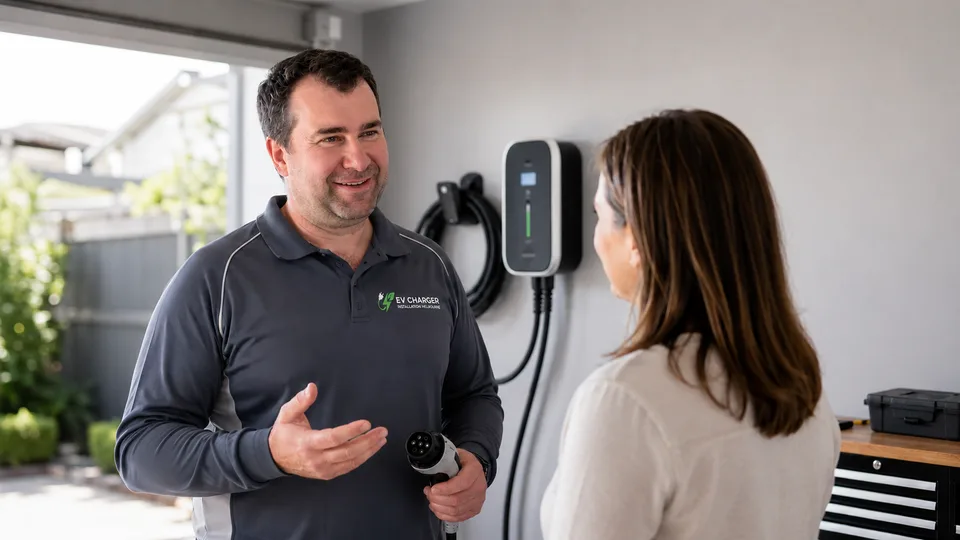
A charger that will not start, trips a safety switch or stops partway through a session can have several causes. A damaged cable, unsuitable circuit, power supply issue or fault within the charger itself may look similar from the driver’s seat. The sensible first step is to record the symptoms and stop using equipment that shows signs of damage or overheating. The electrician assesses the electrical installation and explains whether the next step is a repair, manufacturer support or replacement of a failed unit.
EV charging essentials
These symptoms are reasons to have the setup checked, not invitations to open the unit yourself.
Record when the session fails and whether the vehicle or charger shows an error message. Intermittent faults can relate to controls, connections or electrical supply.
Do not keep resetting a breaker that trips repeatedly. Have the charger circuit and associated protection assessed by a licensed electrician.
Stop using the charger if a plug, cable or enclosure is damaged, hot or smells of burning. Keep clear of affected equipment and arrange an electrical inspection.
02 / EV charging guidance
The outcome depends on what testing shows and whether the manufacturer supports repair.
We assess the circuit, protective devices and connection points to separate supply problems from equipment faults.
We inspect accessible installation components and review any visible damage or reported error behaviour, subject to the manufacturer’s safety instructions.
If the issue sits inside a sealed manufacturer unit, warranty or authorised product service may be the right path. We explain what the electrical findings do and do not establish.
Clear advice, tailored to site
The outcome depends on what testing shows and whether the manufacturer supports repair.

03 / EV charging guidance
the electrician looks at the electrical supply before recommending a final charger position or connection.
Tell the electrician the make, model, fault message and whether the breaker trips. Photos help when it is safe to take them.
Stop using equipment that shows damage, overheating or repeated tripping. Do not open covers or alter fixed wiring.
The electrician checks relevant electrical components and identifies the likely source of the fault.
We discuss any electrical repair, replacement, manufacturer referral or further testing needed before carrying out additional work.
04 / EV charging guidance
A useful quote separates the charger itself from the electrical work and any upgrades.
Existing protective devices, circuit space and electrical load affect whether a dedicated circuit can be added or the board needs work.
A charger near the switchboard is different from one that requires a longer route through walls or to a detached parking space.
The charger model, connectivity requirements and any associated testing or setup contribute to the final scope.
Clear advice, tailored to site
A useful quote separates the charger itself from the electrical work and any upgrades.
05 / EV charging guidance
Not every charger fault can or should be repaired on site. Sealed electronic modules and software issues may need manufacturer assistance or an approved service route. A fault displayed by the vehicle does not automatically mean the wall charger is faulty. Electrical inspection does not replace a product warranty assessment or guarantee that every unit can be repaired.
06 / EV charging guidance
the electrician performs the electrical work and checks the installation before handover.
The charger must have suitable circuit protection and wiring for the intended load. An electrician checks the supply rather than assuming an existing power point can handle a fixed wall unit.
The position is checked against parking access, cable reach, walls and the switchboard. Keeping cables out of walkways matters as much as keeping the installation neat.
The installation is checked before handover, and a Certificate of Electrical Safety is issued for electrical installation work as required in Victoria. Ask the electrical contractor for current insurance details as part of the quote.
These related pages cover the next decision without repeating the same installation advice.
Understand the load and circuit checks that determine whether an upgrade is needed.
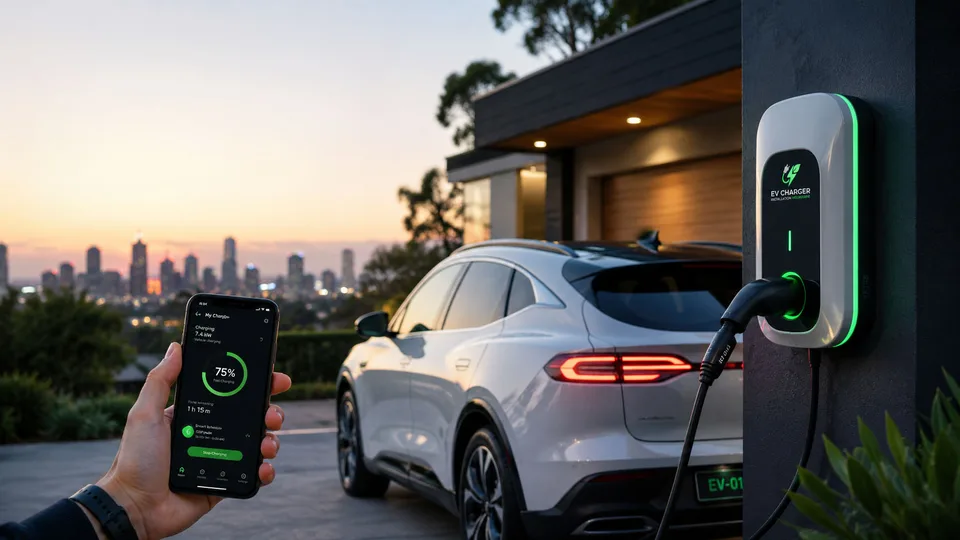
Compare app scheduling, charge monitoring and solar-aware features before installation.
Find our phone number and online enquiry form for an EV charger enquiry.
Clear advice, tailored to site
Every EV charging project starts with the vehicle, the available power and a practical plan for the property.
Helpful answers
Several problems can cause tripping, including an electrical fault, leakage or unsuitable protection. The reason cannot be diagnosed from the symptom alone. Stop repeated resetting and ask a licensed electrician to assess the circuit and charger installation.
the electrician can assess the electrical installation and discuss faults involving different charger brands. Whether a particular unit can be opened or repaired depends on its design, manufacturer conditions and parts availability. Some faults are better handled through the manufacturer or replacement.
No. Stop using charging equipment with visible cable damage, unusual heat or a burning smell. Do not tape a damaged cable or attempt electrical repairs yourself. Arrange an inspection and follow any manufacturer safety instructions.
No. Maintenance can involve checking condition, connections and operation before a fault is obvious. A repair starts with a known problem and diagnosis. Either way, electrical work is performed only where appropriate and with the equipment made safe.
Yes, the electrician can install a customer-supplied charger after checking its suitability for the vehicle, electrical supply and location. Send the make and model with your enquiry. If the product or its requirements do not suit the site, the electrician will explain the issue before installation.
Not automatically. The available load, switchboard condition, protective devices and proposed charger rating must be assessed first. Some homes can support a suitable dedicated circuit without a board upgrade; others need changes to make the installation safe and compliant. The quote should separate those items.
Yes. For electrical installation work, The electrician issues a Certificate of Electrical Safety as required in Victoria. The electrician also tests the completed work and explains how to use the charger. A certificate is not a claim that every charger or home is suitable without an electrical assessment.
Let’s get you charging
Tell the electrician about your vehicle, parking space and electrical supply. Send photos if you have them and get a clear quote for ev charger repairs and maintenance in Melbourne. Request a free quote