Employee parking
Workplace chargers can be planned around cars parked for longer periods. The electrical arrangement, access rules and any billing setup need to suit the premises.
EV charging across Melbourne
Commercial EV charger installation in Melbourne starts with how your site is used. We check your switchboard and provide an itemised quote.

The practical starting point
A workplace car park, retail tenancy and small vehicle depot have different daily charging patterns. Staff may park all day; delivery vehicles may need predictable access; visitors may stay briefly. Before choosing chargers, the useful questions are how long vehicles remain, how many will charge at once, who controls access and what power the building can spare. Commercial EV charging feasibility is assessed case by case, including the available supply, load management, site access and any infrastructure changes. A suitable proposal depends on the actual site.
EV charging essentials
Each audience has a different reason to provide charging.
Workplace chargers can be planned around cars parked for longer periods. The electrical arrangement, access rules and any billing setup need to suit the premises.
Retail and hospitality sites should consider dwell time, charger visibility, accessible parking and whether the charger is private or available to visitors.
Fleet charging depends on vehicle range, return-to-base times and how many vehicles need energy during the same window.
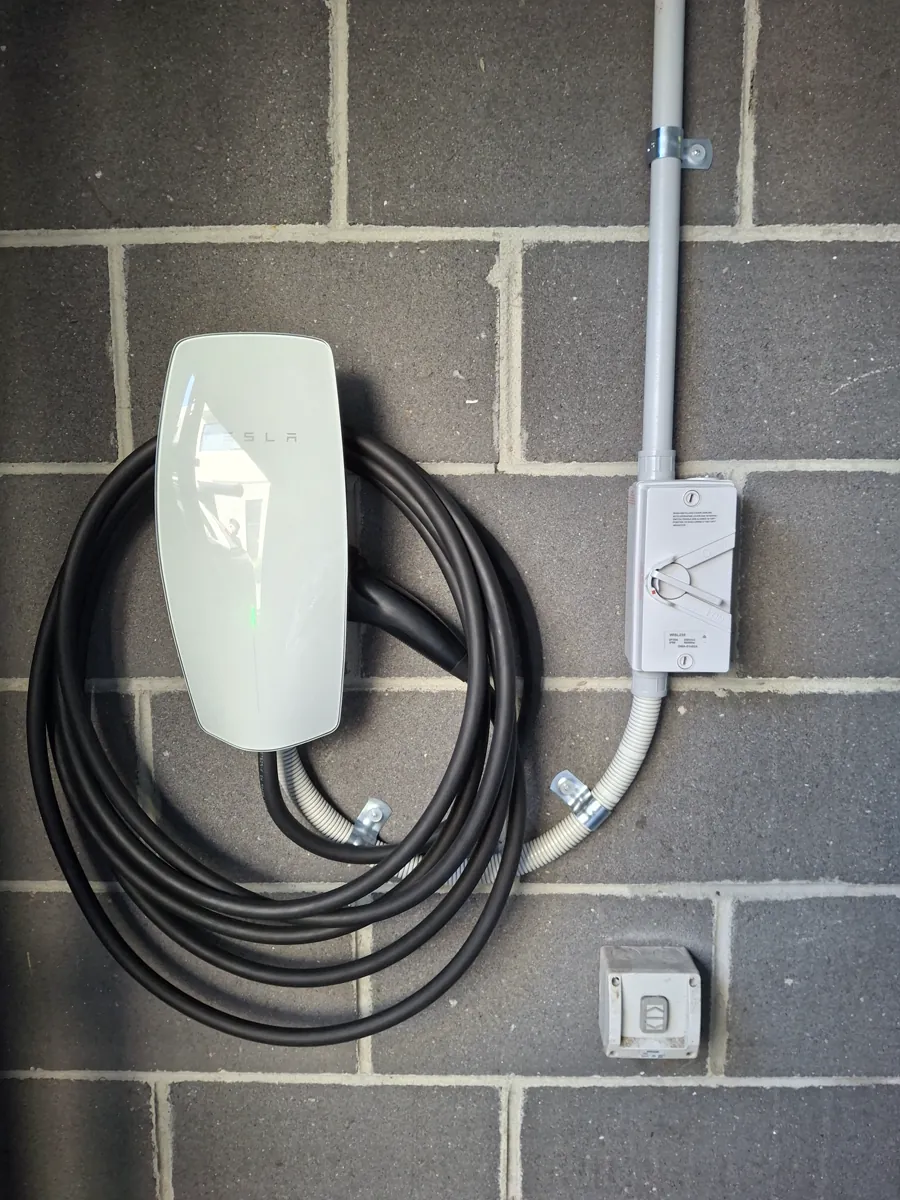
02 / EV charging guidance
Choosing a charger before assessing the site can lead to the wrong power or layout decision.
We assess the available electrical capacity, existing building loads and likely demand from concurrent vehicles.
A workable plan considers bays, pedestrian movement, mounting locations, cable protection and room for maintenance.
Where relevant, we discuss charger access, load management and whether the site may need more bays later. Billing platforms and complex systems can require specialist input.
Clear advice, tailored to site
Choosing a charger before assessing the site can lead to the wrong power or layout decision.
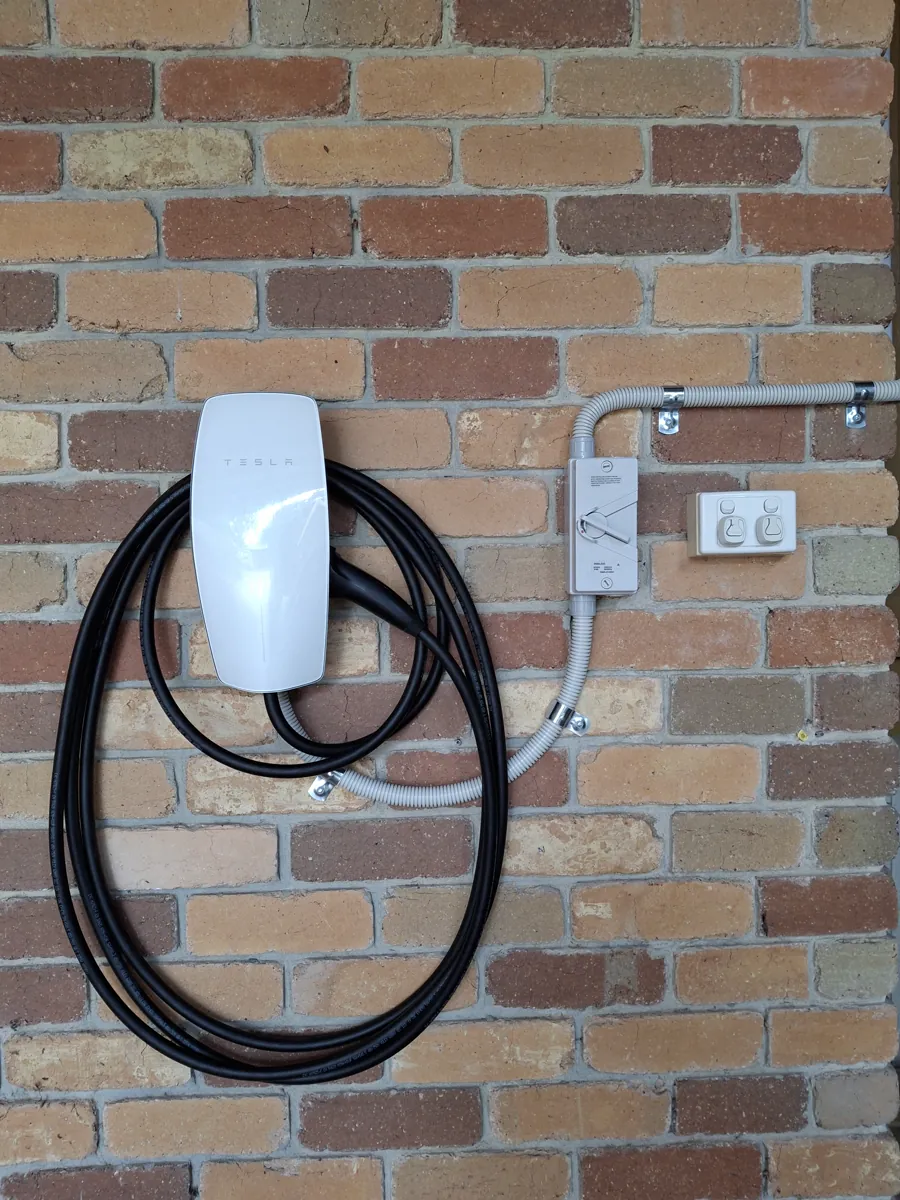
03 / EV charging guidance
the electrician looks at the electrical supply before recommending a final charger position or connection.
Share vehicle types, number of bays, parking duration and whether charging is for staff, customers or a fleet.
the electrician examines available electrical information, proposed locations and the need for site-specific assessment.
The proposed work sets out charger rating, circuits, routing and any upgrades or further specialist design needed.
Installation is considered after the scope, approvals, site access and compliance needs are agreed.
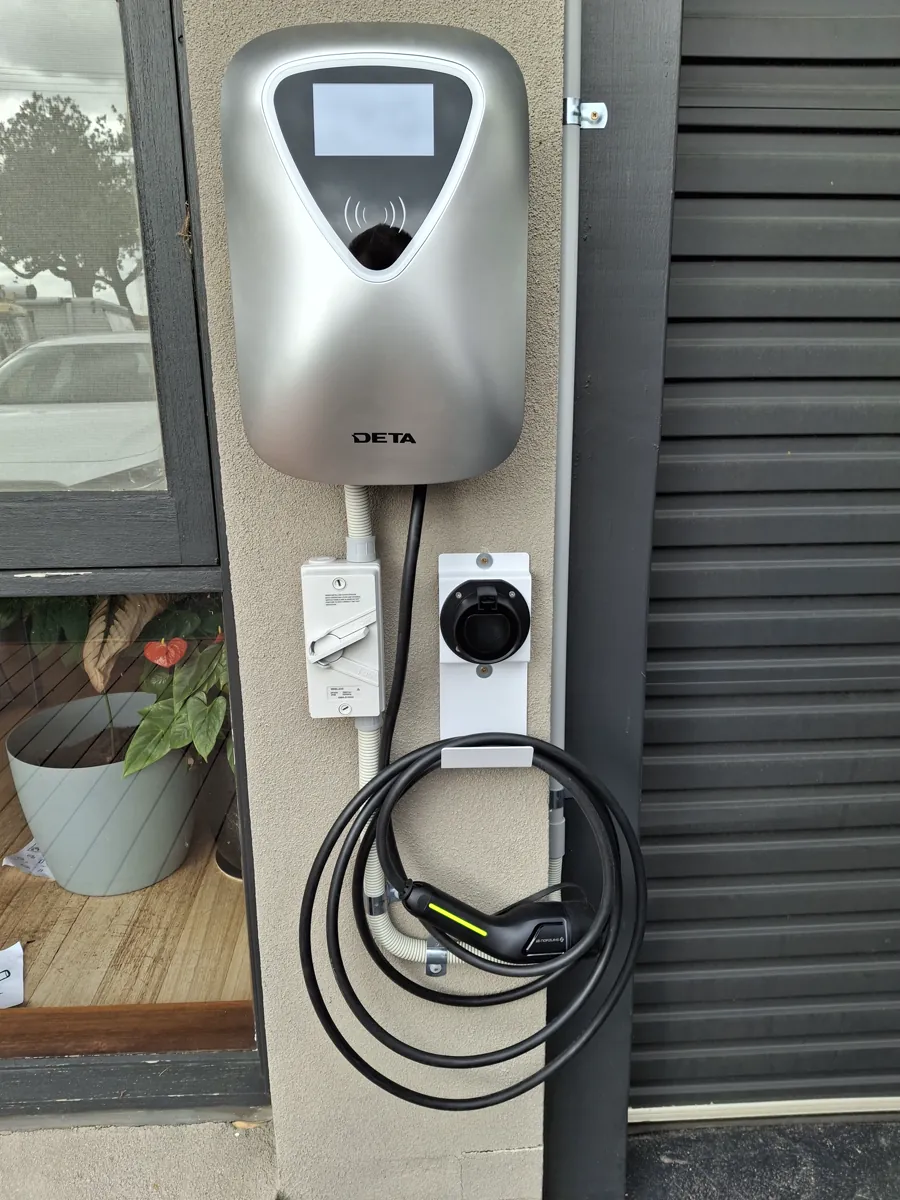
04 / EV charging guidance
A useful quote separates the charger itself from the electrical work and any upgrades.
Existing protective devices, circuit space and electrical load affect whether a dedicated circuit can be added or the board needs work.
A charger near the switchboard is different from one that requires a longer route through walls or to a detached parking space.
The charger model, connectivity requirements and any associated testing or setup contribute to the final scope.
Clear advice, tailored to site
A useful quote separates the charger itself from the electrical work and any upgrades.
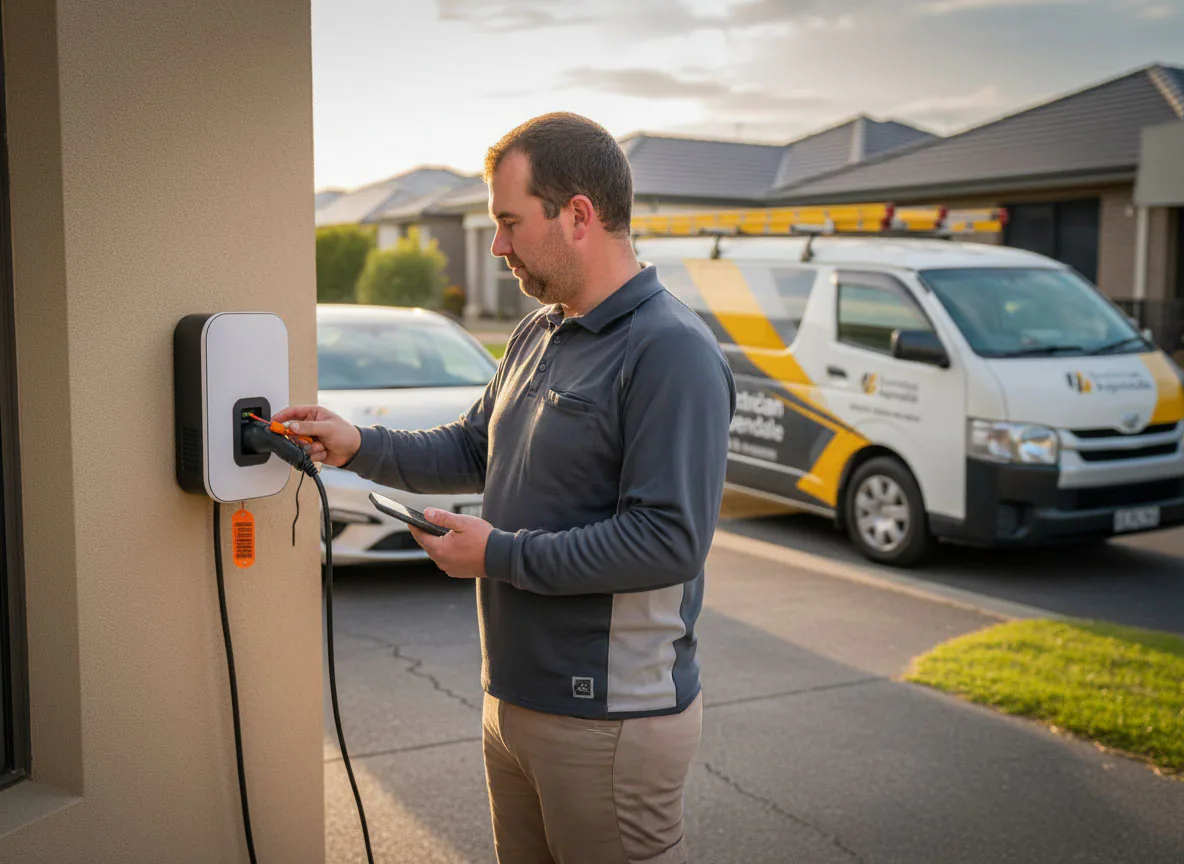
05 / EV charging guidance
Commercial charging can move beyond a straightforward light-commercial installation. Public rapid charging and large networked depots can require specialist design, connection approvals and equipment beyond a standard on-site installation. Landlord approval, building management requirements and any applicable network changes must be resolved before work. Charging software, payment collection and commercial support terms depend on the selected products and vendors.
06 / EV charging guidance
the electrician performs the electrical work and checks the installation before handover.
The charger must have suitable circuit protection and wiring for the intended load. An electrician checks the supply rather than assuming an existing power point can handle a fixed wall unit.
The position is checked against parking access, cable reach, walls and the switchboard. Keeping cables out of walkways matters as much as keeping the installation neat.
The installation is checked before handover, and a Certificate of Electrical Safety is issued for electrical installation work as required in Victoria. Ask the electrical contractor for current insurance details as part of the quote.
These related pages cover the next decision without repeating the same installation advice.
Assess shared electrical capacity, load management and owners corporation decisions.
Find out when three-phase supply is useful and what your vehicle can accept.
Understand which chargers, cable routes and electrical changes affect your quoted cost.
Clear advice, tailored to site
Every EV charging project starts with the vehicle, the available power and a practical plan for the property.
Helpful answers
They may be able to, depending on the site layout, charger controls, access policy and electrical capacity. It is better to decide who needs to charge and when before selecting a product. A shared site may need separate parking arrangements or user controls.
Start with the number of vehicles, arrival and departure times, daily energy needs, parking bays and available building power. Those details help establish whether charging can be staggered or whether electrical upgrades or further design work are needed.
This site primarily covers home and light-commercial EV charging enquiries. Large public DC fast-charging networks can require specialist equipment, grid connection and project delivery. We can discuss the initial enquiry and clarify whether it is within scope before quoting.
Not always. A business may choose to provide staff charging as an amenity or may need user-level tracking or payment. Billing capabilities depend on the chargers and software chosen, so those requirements should be identified before equipment is purchased.
Yes, the electrician can install a customer-supplied charger after checking its suitability for the vehicle, electrical supply and location. Send the make and model with your enquiry. If the product or its requirements do not suit the site, the electrician will explain the issue before installation.
Not automatically. The available load, switchboard condition, protective devices and proposed charger rating must be assessed first. Some homes can support a suitable dedicated circuit without a board upgrade; others need changes to make the installation safe and compliant. The quote should separate those items.
Yes. For electrical installation work, The electrician issues a Certificate of Electrical Safety as required in Victoria. The electrician also tests the completed work and explains how to use the charger. A certificate is not a claim that every charger or home is suitable without an electrical assessment.
Let’s get you charging
Tell the electrician about your vehicle, parking space and electrical supply. Send photos if you have them and get a clear quote for commercial ev charger installation in Melbourne. Request a free quote