Around 7 kW single-phase
A common home AC charging option using a suitable dedicated single-phase circuit. What to consider: Often sufficient for overnight parking; still requires a supply and load assessment.
EV charging across Melbourne
7kW vs 22kW EV charger choices depend on the vehicle, single- or three-phase supply and home wiring. Learn what matters before requesting a quote.
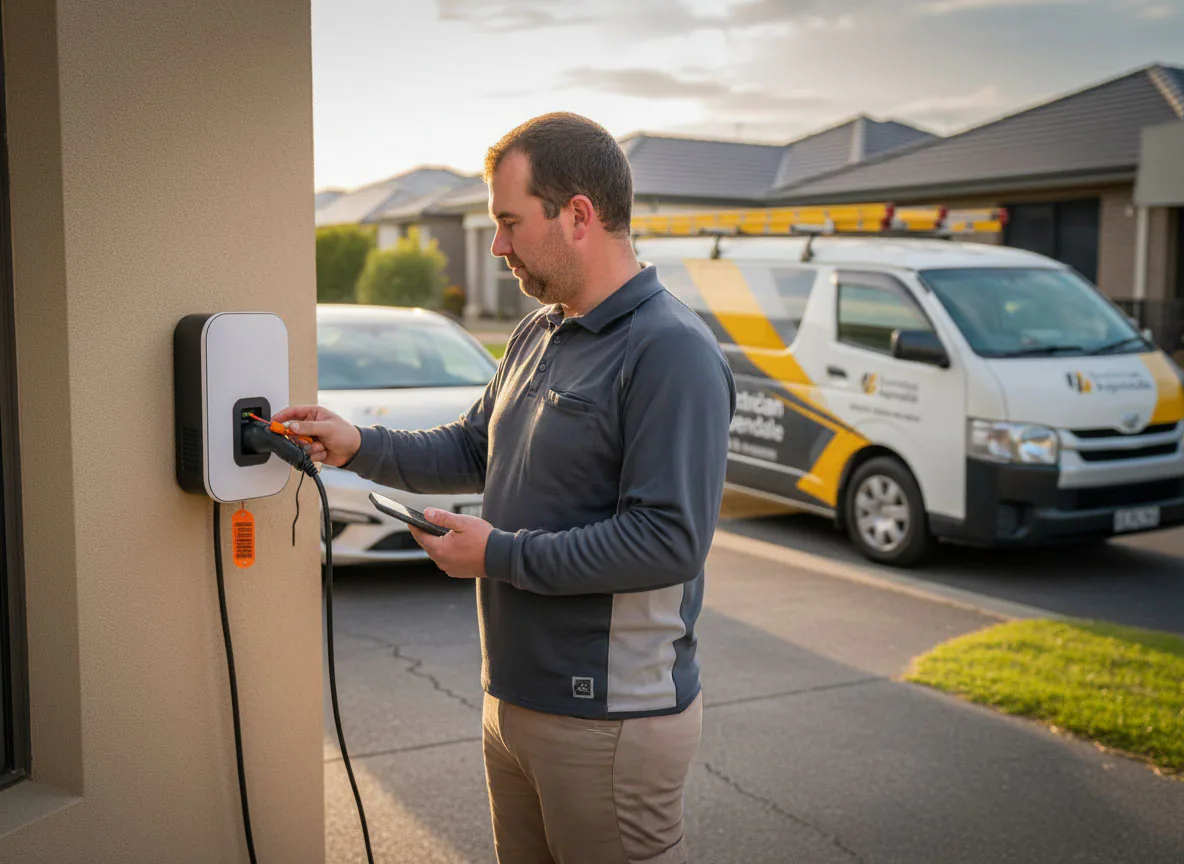
The practical starting point
An AC wall charger supplies electricity to the vehicle, but the vehicle’s onboard AC charging system limits how fast it can use that power. A 22 kW wallbox does not make a car with a lower AC limit charge at 22 kW. On the property side, a common single-phase charging arrangement is around 7 kW, while higher AC ratings can require an appropriate three-phase supply. Actual capability depends on the car, wallbox, available electrical capacity, protective devices and charger configuration. Start with your vehicle specification and normal parking time, then choose a suitable circuit and charger rather than buying by maximum rating alone.
EV charging essentials
These are typical nominal charger classes, not guaranteed charging speeds for every car.
A common home AC charging option using a suitable dedicated single-phase circuit. What to consider: Often sufficient for overnight parking; still requires a supply and load assessment.
A three-phase AC option that can be useful with a compatible car and an appropriate supply. What to consider: The vehicle must support the rate, and the electrical supply must have suitable spare capacity.
A higher-rated AC wallbox capable of serving compatible vehicles and suitable electrical installations. What to consider: Many vehicles accept less than 22 kW AC, so the full charger rating may never be used.
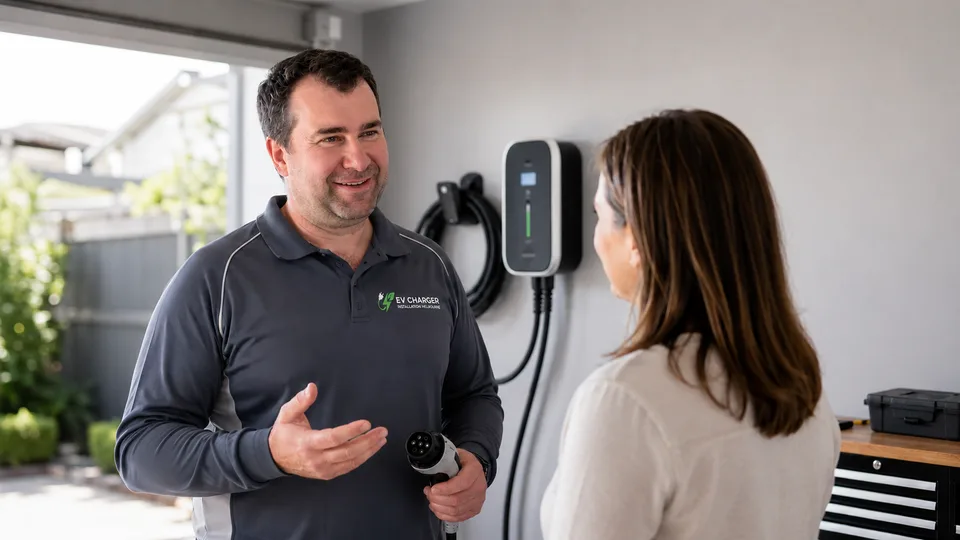
02 / EV charging guidance
The lowest applicable limit in the system determines what the car can draw.
Find the maximum AC charging rate in the car’s specification for the exact model and variant.
Single-phase and three-phase arrangements differ, and supply capacity must be considered alongside household loads.
The wallbox rating, circuit protection, cable design and any load management settings affect the permitted output.
The car can also manage charging according to its operating state, battery conditions and internal limits.
Clear advice, tailored to site
The lowest applicable limit in the system determines what the car can draw.

03 / EV charging guidance
Convenience is about a repeatable routine, not just the highest possible number.
If you park for many hours, a suitable single-phase setup may meet your regular driving needs.
Buying a 22 kW wallbox adds little practical speed where the car can only accept a lower AC rate.
The electrician can assess a circuit sized for a real requirement instead of assuming a costly supply upgrade is needed.
04 / EV charging guidance
the electrician looks at the vehicle and supply before quoting a power level.
Send the vehicle model, charger name if you already have one, and the location you want to charge. A clear photo of the switchboard helps us understand the starting point.
the electrician checks the available electrical capacity, the protection needed and a practical path from the switchboard to the charger. Any necessary upgrade is discussed before work starts.
The quote sets out the proposed equipment and electrical work so you know what is being installed. If an issue changes the scope, it is raised for discussion rather than hidden in vague allowances.
The charger is fixed, connected and tested by a licensed electrician. You are shown the controls and given a Certificate of Electrical Safety for electrical installation work as required in Victoria.
Clear advice, tailored to site
the electrician looks at the vehicle and supply before quoting a power level.

05 / EV charging guidance
These related pages cover the next decision without repeating the same installation advice.
Find out when three-phase supply is useful and what your vehicle can accept.
Understand the load and circuit checks that determine whether an upgrade is needed.
Understand which chargers, cable routes and electrical changes affect your quoted cost.
Helpful answers
Not necessarily. That ratio assumes the car can accept the higher AC charging rate and the electrical installation can supply it, which is not true for every vehicle or home. The onboard charger and power supply may limit the practical difference.
A 22 kW AC charging configuration generally requires a suitable three-phase supply. A property with only single-phase power cannot simply provide that three-phase output without further electrical or network arrangements. A licensed electrician should assess the existing supply.
It is the equipment in the vehicle that converts AC electricity supplied by a home charger for the battery. Its maximum AC charging rating can be lower than the wallbox rating. That is why vehicle specifications matter when choosing home charging hardware.
A fixed home EV charger generally needs wiring and protection designed for its sustained electrical load. The electrician checks the charger rating, switchboard and site conditions to determine the appropriate connection.
Use the exact car model and variant rather than only the brand name. Different cars can have different onboard AC limits and charging needs. We check the relevant specifications before recommending a suitable wall charger rating.
Yes, the electrician can install a customer-supplied charger after checking its suitability for the vehicle, electrical supply and location. Send the make and model with your enquiry. If the product or its requirements do not suit the site, the electrician will explain the issue before installation.
Not automatically. The available load, switchboard condition, protective devices and proposed charger rating must be assessed first. Some homes can support a suitable dedicated circuit without a board upgrade; others need changes to make the installation safe and compliant. The quote should separate those items.
Let’s get you charging
Tell the electrician the car model and whether your property has single- or three-phase power. We can assess a useful charger rating before giving a quote. Request a free quote